Microdosing psilocybin is surrounded by enthusiastic stories: more focus, a better mood, more creativity. But what does scientific research actually show? This guide gives an honest overview of the most important studies, what they found, and what we still don’t know.
In short: large surveys and observational studies find that people who microdose report a better mood and less anxiety and stress. But the best controlled studies, where people don’t know whether they took a microdose or a placebo, find that much of that benefit can also be explained by expectation (the placebo effect). One of these trials did find a small effect on the originality of ideas. Larger clinical trials, for example in depression, are still running. Microdosing is promising but not proven.
Why this is hard to research
A microdose is meant to be sub-perceptual: you shouldn’t clearly feel it. That makes good research difficult:
- People who choose to microdose often expect it to help, and expectation alone can improve how you feel.
- If participants can guess whether they had a microdose (for example because they feel something), the “blind” design breaks.
- Many studies are small, short, or use self-collected questionnaires.
That’s why it matters what kind of study a result comes from.
The most important studies
| Study | Design | What it found |
|---|---|---|
| Rootman et al., 2022, Scientific Reports | Observational, 953 microdosers and 180 non-microdosers, followed for one month; no placebo | Microdosers reported more improvement in mood and more decrease in depression, anxiety and stress than non-microdosers. |
| Szigeti et al., 2021, eLife | “Self-blinding” study, 191 people, 4 weeks; microdose or placebo without knowing which (mostly LSD) | Both the microdose group and the placebo group improved on well-being; there was no clear difference between them. What people believed they took predicted their scores better than what they actually took. |
| Cavanna et al., 2022, Translational Psychiatry | Double-blind, placebo-controlled, 34 people, 0.5 g dried psilocybin mushrooms | No improvement in well-being, creativity or cognition compared to placebo. Stronger effects were mainly felt by people who correctly guessed they had a microdose. |
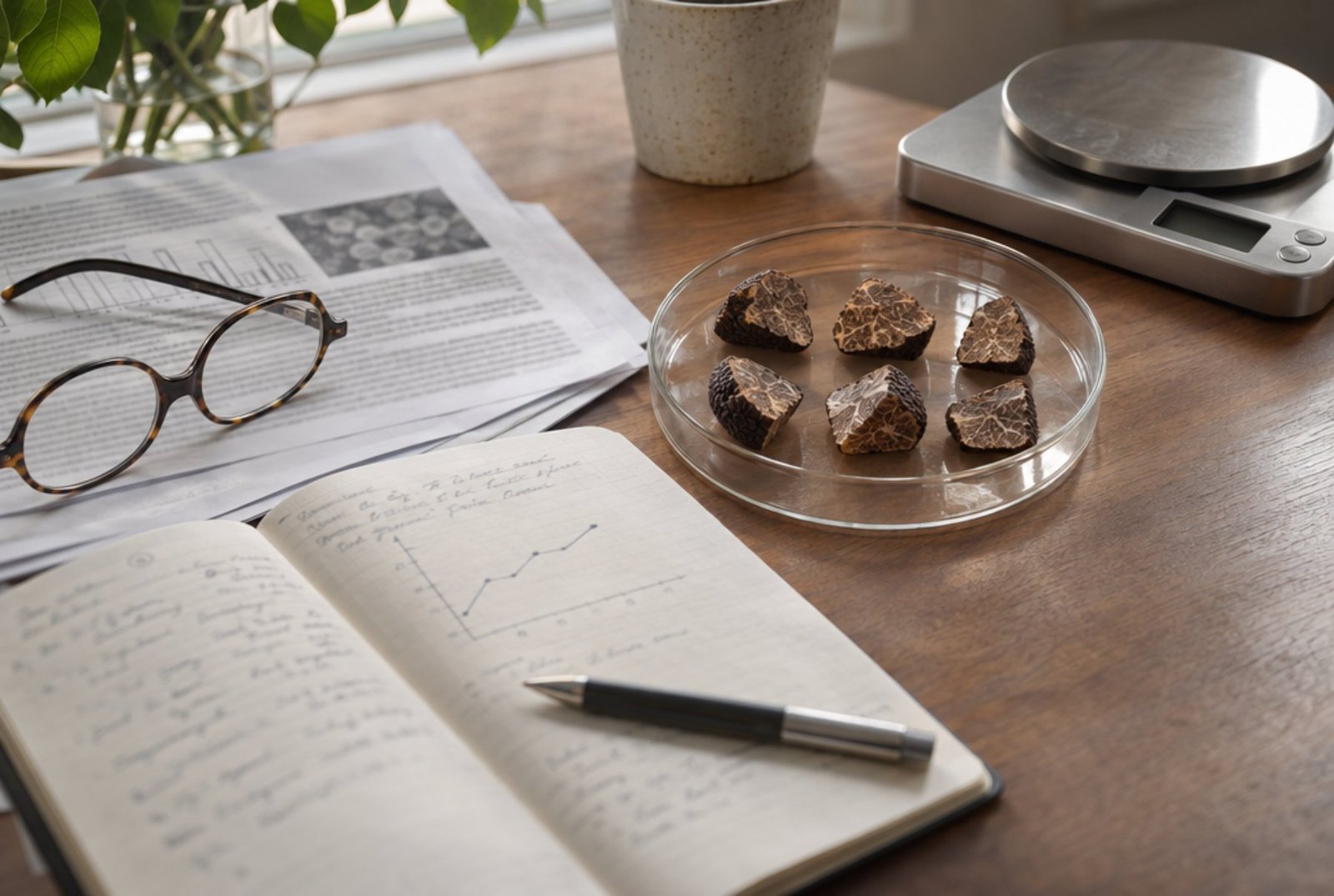
| Prochazkova et al., 2025, Neuropharmacology | Three double-blind, placebo-controlled trials with fresh truffles (about 0.65–1.5 g), 171 people in total | No more ideas and no better problem solving, but a higher share of original ideas. Higher doses per kilogram of body weight were linked to more originality. |
What this means
- The experiences people report are real, but part of them likely comes from expectation, attention and the routine of a protocol itself.
- Controlled studies so far show small or no effects on mood, well-being and cognition compared to placebo.
- Creativity: there’s a first sign of a small effect on originality, not on the amount of ideas.
- Dose matters: a fixed microdose may be too low for heavier people. That’s why we give doses by body weight.
- Long-term effects of microdosing for months or years have hardly been studied.
What’s still being researched
Researchers are now running larger, longer clinical trials, for example on microdosing psilocybin in people with depression, under medical supervision and with a placebo group (study protocol in BJPsych Open). These trials should give clearer answers in the coming years. Microdosing is not a treatment for depression or any other condition, and you should never stop medication to microdose.
How we use this at Awake
- We don’t promise specific results. Effects differ per person, and research doesn’t support big claims yet.
- We advise a clear protocol, such as Fadiman (1 day on, 2 days off), breaks after about 2 months, and a journal, so you can judge for yourself what it does for you. See how to microdose and what a microdose feels like.
- We update this page when important new studies appear.
→ View the Awake microdosing strip (6 × 1 g)
Frequently asked questions
Is microdosing scientifically proven?
No. Surveys find that microdosers report benefits, but placebo-controlled studies so far find small or no differences compared to placebo. Larger clinical trials are still running.
Does microdosing help with depression or anxiety?
That hasn’t been shown in controlled trials yet. Microdosing is not a treatment. If you have depression or anxiety, talk to a doctor, and never stop or combine medication without medical advice.
Can microdosing make you more creative?
One set of three placebo-controlled trials found a higher share of original ideas, but not more ideas in total. Other studies found no effect on creativity. The evidence is still thin.
📚 Explore all Awake guides · 🌱 Our story: grown in the Netherlands by a master grower
Questions?
Check our FAQ or email us at info@awake-shop.com. We’re happy to help.
Medical disclaimer: this guide is for educational purposes only and is not medical advice. It is not a substitute for professional medical advice, diagnosis or treatment. Always consult a qualified healthcare professional for any changes to your diet, exercise routine or medication, and never disregard professional medical advice because of something you read here. Do not use psilocybin if you are under 18, pregnant or breastfeeding, take medication such as SSRIs or other antidepressants, or have (a history of) serious mental health conditions. Effects differ per person; we don’t promise specific results.